Overview
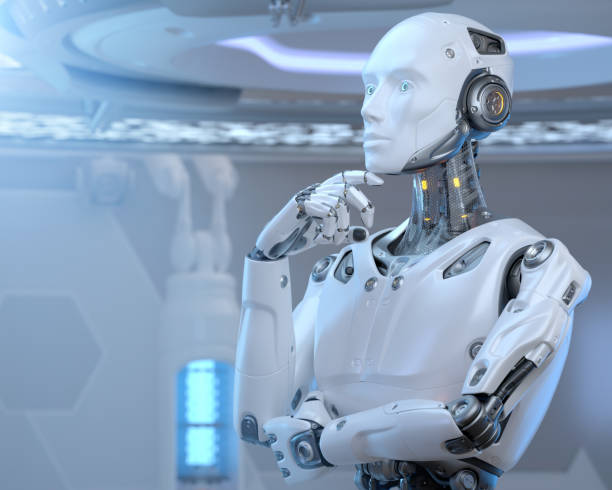
A humanoid robot is a machine built to roughly match the human form: a torso, a head, two arms and, usually, two legs. The shape is not just for show. Our homes, factories, hospitals and vehicles are designed around human bodies, with stairs, door handles, tool grips and workstations at human height. A robot that shares our proportions can, in principle, work in those spaces without anyone rebuilding them.
That promise has driven decades of research. Only recently have advances in actuators, batteries and AI made general-purpose humanoids look commercially realistic rather than purely experimental.
Pioneers and Famous Examples
- WABOT-1 (Waseda University, 1973): Widely regarded as the first full-scale humanoid. It could walk slowly, grip objects and hold a simple conversation in Japanese.
- ASIMO (Honda, 2000): The robot that introduced humanoids to the public. ASIMO could walk smoothly, climb stairs, run and recognise faces. Honda retired it in 2022, but its research shaped a generation of bipedal robots.
- Atlas (Boston Dynamics): Famous for videos of parkour, backflips and dance routines. The original hydraulic Atlas was retired in 2024 and replaced by a fully electric version aimed at industrial work.
- Sophia (Hanson Robotics, 2016): Better known for expressive facial animation and media appearances than for mobility, Sophia sparked wide public debate about human-like machines.
- Vyommitra (ISRO): A half-humanoid developed in India for the Gaganyaan human spaceflight programme. It is designed to fly on uncrewed test missions, monitoring cabin conditions and operating panels much as an astronaut would.
Basic Components
Every humanoid, from a research prototype to a commercial product, is built from the same core subsystems:
- Mechanical structure: A lightweight, rigid frame, typically aluminium alloys and composites, with joints arranged to mirror human degrees of freedom (often 25 or more across the body and hands).
- Actuators: Electric motors with high-ratio gearboxes, or in some designs hydraulics, that drive each joint. Torque density and back-drivability determine how strong, fast and safe the robot can be.
- Sensors: Cameras and depth sensors for vision, IMUs for balance, joint encoders for position, and force/torque sensors in the wrists and feet so the robot can feel contact with the ground and with objects.
- Power system: Battery packs, usually in the torso, sized against weight. Runtime is still one of the biggest practical limits for untethered humanoids.
- Control and computing: Real-time controllers handle balance and whole-body motion hundreds of times per second, while onboard GPUs run perception and planning.
- Hands and end effectors: Multi-fingered hands are among the hardest parts to build. Dexterity, durability and cost pull in different directions.
- Software and AI: Locomotion controllers, motion planners and, increasingly, learned policies trained in simulation that let robots adapt to new tasks without being explicitly programmed.
Exciting Recent Developments
- Humanoids entering workplaces: Agility Robotics' Digit has moved totes in logistics warehouses, and Figure AI has piloted its humanoid at a BMW manufacturing plant. These are early, narrow deployments, but they mark a shift from lab demos to paid work.
- Foundation models for robots: Large vision-language models are being adapted into robot "brains" that take spoken or written instructions and translate them into actions, making humanoids far easier to re-task.
- Learning in simulation: Physics simulators let robots practise walking, recovering from falls and manipulating objects millions of times before touching real hardware, sharply cutting development time.
- Falling costs: Companies such as Unitree have launched humanoids at prices accessible to universities and smaller labs, widening who can do humanoid research.
- Big-tech investment: Tesla's Optimus programme and several heavily funded start-ups are betting that mass manufacturing can make general-purpose humanoids affordable.
Challenges Ahead
Humanoids still face real hurdles: limited battery life, the cost and fragility of dexterous hands, safe operation alongside people, and reliability over thousands of hours of work. Wheeled robots, robotic arms and drones remain the better choice for many tasks today.
Why It Matters
For defence, industry and disaster response, a robot that can climb stairs, open doors and use existing tools could take on dull, dirty and dangerous work without redesigning the environment around it. At Trinnovate, we follow these advances closely as part of our work on autonomous systems. The progress in perception, control and on-edge AI driving humanoids is the same technology that makes every robot more capable.